It was great to have come across you on the road of life and shared part
of it with you. After this while we’ve walked together, the time has come for
us to part for you to follow your own path, so I’d like to give you something
as a form of present to take with you. By now, you know the gift I’ve chosen to
give you is a good old eraser. What you don’t know yet is why I’ve chosen to
give you an eraser, so I’ll explain. A
long time ago, one of my teachers gave me an eraser to remind me of three important lessons this simple
school supply which we learn to use so early on in our school life can teach us
for life beyond school.
Lesson #1 –Erasers allow us to correct
mistakes, and we should never forget that mistakes are correctable. Mistakes happen! It’s a bit of
a cliché, I know, but we should try to remind ourselves every time we make one
that everyone makes mistakes. We just have to erase them, and let go of the
mistake. This is easier said than done sometimes. Many times! However, we must
always strive to forgive ourselves for our own errors, forgive others for theirs
and move on. This eraser will
hopefully help you erase the ugliness of the past and help you focus on what
comes next. Of course, we must learn from the past, but we ought to try to stay
forward-focused for our own good. Soon you’ll learn that life is
always about what comes next! The beauty of a simple eraser, like the one I’ve given you, is
that – without having to rip off the entire page - it erases well enough for
you to focus on what comes next more wisely and more humbly, strengthened with
the experience of a life lesson learnt, no matter how ugly or how tough.
Lesson #2 –Erasers give us the power to
adjust, and our best work requires constant adjustments and updates. Your plans can be written
down, but they need to be written in such a way that you can easily erase them
and make new ones, again, in such a way that you can easily erase them as many
times as you need to. The world, your own circumstances and you yourself will
keep changing. So here comes yet another cliché:change is the only constant. This eraser will
help you to be more flexible and adaptable to changes, it will allow you to
erase your plans and make new ones as you go along on the road of
self-discovery and self-realization.
Lesson #3 – Write the script of your life softly and gently and use
this eraser as much as you have to! Think of an essay plan, now that we’ve done
so many! Erasers invite us to edit,
and the results of a second (or third) draft are usually better: that’s what
we’ve learnt together here at school, isn’t it? If you don’t
succeed (or succeed as completely as you hoped), the eraser will let you make
edits and try again. Erasers give us a
safety net, and remind us that the pressure is never as great as we might
think.
I could write much
more about each of these points, or add quite few, but in some way, that would
defeat my purpose, so I’ve erased several lessons I’ve learnt on the way just to
share these three the way they were
shared with me. I’ve created my own meaning, and deepened the lessons as I’ve
made them my own. Now I encourage you to do the same and I trust you can because I believe in you: never forget that, please!
You probably never
noticed that special eraser I was once given by this special teacher of mine when
I was your age, and which I’ve carried with me ever since, because perhaps I
carry too many books and stuff, out of sheer insecurity...My eraser is a bit worn out by now of so much
rubbing off the mistakes I keep making all the time and it blends in with the
rest of everything else I carry along. But I know it’s there, and you may have
noticed that I‘ve needed to use it quite a few times during the time we’ve
shared together!
My hope is that you do
the same: that you go through your own life with this eraser at hand and that
it becomes your reminder of how happy you can be as long as you are willing and
ready to use it especially you don’t feel happy. Hopefully someday, some other
person you share time and life with will benefit from these three lessons and
you will give them an eraser too.
1. Identify and
underline the key points in both input texts. Make sure to include that when
you write your essay.
2. Summarise the key
points in your own words.
3. Use an academic
writing style (formal or neutral register), a wide range of vocabulary with
precision and varied grammatical structures (include inversion of order and
impersonal constructions now and then). Show all that you know!
4. You must organise
your ideas well, using an introduction, paragraphing and appropriate linking devices.
5. You need to draw
conclusions based on the information given throughout the whole of your answer
and give your opinion by signaling it clearly and explicitly.
Oraganisation and useful language:
*Introduction:
The overarching/ overall/common/general
theme of both texts is...
The texts under
analysis present complementary/
contrasting views on the issue of...
Both authors agree on
the fact/notion that....
....although they probe into/ analyse it from slightly different
points view/ angles/ standpoints and provide/offerdifferent/diverse examples to
illustrate their points/ideas.
While one author
argues that...., the other seems to favour the idea that....
One author states that
.... whereas the other one argues that...
On the one hand, the author of the first text/the former
claims that..., while on the other hand,
the author of the second text/the latter expresses that...
While the first text adopts a more abstract/ theoretical//
viewpoint/ standpoint on the subject, discussing different approaches/ alternatives/ problems/
drawbacks/aspects concerning ....the second text appears to be more practical/descriptive/detached/liberal
in its approach.
The first considers
the fact that…/ adopts a more… viewpoint on... the second text focuses mainly
on... rendering a rather... exposition of the subject matter.
*Body of the essay:
First paragraph: Summarize in your own words the key points of
input text one. Give your opinion.
Second paragraph: Summarize in your own words the key points of
input text two.Give your opinion.
*Useful connectors for the body of your essay:
*Adding ideas:
In the first place / Secondly/ Moreover/Furthermore/ What is more/In addition/ Additionally/ On top of that/ Yet another point worth noting/mentioning.../ Another factor to consider/take into consideration/Lastly/Finally/ Last but not least...
*Contrasting views:
On the one hand / on
the other hand/ However, /Nevertheless,/Still,/Yet, ...
*Justifying
One reason why...
There are many
advantages to…
It cannot be denied
that...
Another positive/negative aspect//
advantage/disadvantage/drawback of …is....
*Giving your opinion on the writers’ views:
In my opinion,/ To my
mind,/ The way I see it,/ I am of the opinion that/ I believe/ I find...
*Conclusion: Restate your previous arguments, sum up and
relate to a broader context.
All in all/ To sum up/
To conclude/ In conclusion.../All things considered/ Taking all of the above
into account.../In view of the above, it can be concluded that.../As stated
above, ....
How is your paper graded?
CONTENT:
All the content has to be relevant to the task.The
target reader has to be informed.
COMMUNICATIVE ACHIEVEMENT:
They writer has to evaluate the key point and
express his or her own ideas clearly and in an easy-to-follow way. The register
has to be formal or neutral all the way through the essay.
ORGANIZATION:
The ideas in the text have to be well organised
to make it a coherent whole.The ideas need to be arranged in a logical sequence
through the use of cohesive devices.
LANGUAGE: The writer has to use a wide range of
sophisticated vocabulary and grammatical structures with accuracy and flexibility.
Five Things You Need to Know about Writing Articles
In Cambridge Proficiency, you might be asked to write an article. But do you know what makes an article different from other types of writing?
1 The reader is identified
An article is like a direct conversation with the reader. The exam question might tell you who your readers are. For example, the students at a school, or the people living in a town or people who are interested in sports. Everything you write must speak to that reader and engage their interest right from the first sentence.
2 It has to get attention
If you're anywhere on the internet these days, you'll be bombarded with articles with headlines that pull the reader in. It's called "click baiting" and all the writer is trying to do is make you open the page to read their article.You need to think like a journalist when you're writing your article.
For an article to work, it has to be engaging enough to read all the way through. Remember how bored the examiner must be after reading fifty exam papers. Make it easier for them to get a good impression about your writing by entertaining them. Add humour, real life or made up examples, or make up quotes.
4 It has to be easy to read
Use subheadings to break up the text and make clear paragraphs. Write in a semi-informal, conversational style. And make sure there is organisation to your ideas. The planning stage is vital for this. Spend 5-10 minutes brainstorming ideas and choose the best three or four. Think what your subheadings might be and then write a short introduction that lets the reader know what to expect.
Keep in mind that you want the reader to keep reading, so don't tell them exactly what they will read. This is not an essay! In an essay you usually restate the question, explain how you will answer it and maybe say why it's important. In an article, that will kill the reader's interest.
5 Write a good ending In an essay you sum up the points that have gone before and draw a conclusion from that. But in an article, it's better to give the reader something to think about, perhaps by asking them another question or giving them a call to action. Often, the best endings link back to the starting point in some way. Here are two endings I could use for this article:
Look at your internet browsing history from the last day. Which articles got your attention? Can you see how they did it?
So, now you know how to write an article, why don't you write one giving advice on something you know about?
Common mistakes students make in articles
The language is too formal and more suited to essays. Avoid words like: to sum up, some people say, nevertheless, on one hand etc.
They don't use quotes or examples
They either use not enough, or too many, questions. The questions, called rhetorical questions because they don't require an answer, shouldn't be more than one per paragraph. Good examples are:
Have you ever ……..?
What do you think about ……..?
Are you one of those people who thinks that ……?
What would life be like if ……?
Will the future bring us ….. ?
* A title which makes the subject immediately clear. For some reason, people like reading lists! And a direct, rhetorical question in the first paragraph to make readers want to find out the answer.
In Part 1 you are asked to...... and evaluate .... texts
Part 2 is between ..... and
........ words long
Choices in Part2 can be report,
................... , letter or ......................
Why can you lose marks in the
Writing Paper?
1.
..........................................
2.
..........................................
3.
..........................................
4.
..........................................
What are the six words or pairs
of words you should not use in your writing? For each word or pair of words mentioned,
provide some of the alternatives mentioned by the speaker:
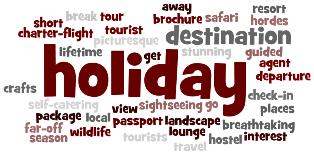
You probably know the meaning of individual words like ‘flight’, ‘tour’ and ‘view’. However, the key to showcasing your advanced English is to show you are able to use these individual words in combination with other words to form set phrases and expressions. Much of the work we'll do at C2 level will have to do with learning these fixed combinations, called "collocations", and expressions, called "idioms".
Take a familiar topic, such as, holidays, for example. If you are asked to speak or write about holidays, you first need to think of specific advanced vocabulary you can use to do so. Think of the kind of holidays you like. See what this C2 level student came up with in answer to the question:
What kind of holiday do you like?
"I try to avoid tourist traps … I like to get away from it all and prefer going somewhere off the beaten track … last year I had the holiday of a lifetime … a two week wildlife safari in Kenya.
*In this answer, how many collocations and idioms can you identify?
*What about the answer to the following question?
What do you like to do when you’re on holiday?
"I enjoy visiting the local places of interest … I like to go sightseeing and always sign up for guided tours as it’s a chance to be shown around and take photographs … one of my hobbies."
*And the one below?
Do you have many tourists in your country?
"Yes … we have a lot of holiday resorts along the coast that are popular with tourists … most people come on package holidays and stay in one of the many hotels and self-catering apartments."
Practice Task:
*Describe a beautiful place you once visited. You should say:
when you went to this place
where it was
who you went with
Say why you liked it so much trying to use some advanced vocabulary in your answers, as in the example below:
"I'm not at all fond of long package holidays or guided tours, so a few years ago I decided to go on a long weekend to the Lake District in the UK in order to get away from it all and have a short break … it’s a very popular holiday destination in the north of England, not a far-off placein the middle of nowhere … I went on my own and had a wonderful time … I stayed in a youth hostel and met some really nice people … but the most memorable thing about the holiday were the breathtaking views … and lovely picturesque villages … it can get very busy with hordes of tourists so I decided to go out of season in the autumn … the weather was fantastic and the shops were full of local crafts … a really great holiday … it’s certainly not the kind of short break for someone looking for a busy nightlife but if you want to relax in the middle of stunning landscape I would certainly recommend a holiday to the Lake District."
Definitions
all-in package/package holiday: a holiday where you purchase the travel and accommodation together
breathtaking view: an extremely beautiful view
far-off destination: somewhere a long way away
to get away from it all: to take a holiday to escape a busy or stressful lifestyle
guided tour: an organised group shown around a place of interest by an expert
holiday destination: where you go for a holiday
holiday of a lifetime: a special holiday that you are unlikely to repeat
hordes of tourists: crowds of tourists
local crafts: objects produced locally
long weekend: an extended weekend holiday including Friday or Monday
out of season: outside of the main holiday period
the middle of nowhere:far away from any towns and cities and where few people live
picturesque village: very pretty village
places of interest: sites of interest to tourists
wildlife safari: a holiday, often in Africa, to observe wild animals
short break: a short holiday
to go sightseeing: to look around the tourist sites
travel agent: a shop that specialises in booking holidays
tourist trap: somewhere where too many tourists go
youth hostel: a cheap form of accommodation
Writing task: Write an email to an English-speaking friend you made on your last holiday telling him/her about your travelling experience, your life now,the first classes of your senior year and your plans and expectations for this year.
Proposals are an option for CAE, though not for CPE. A proposal starts by describing the situation in a business, school, club, or other organisation you might be part of. For example, you might have to talk about the computer room in your college or the state of the canteen in your office. Sounds like a report, doesn't it? Well so far it's pretty similar.
The difference between a report and a proposal is that in the latter we have to give recommendations on improving the situation.
You have to persuade whoever is reading the proposal to make the changes you deem best.
So:
*describe a situation
*say how you think it could be better
*try to convince someone you are right
WHO'S GOING TO READ IT?
As you'd expect, sometimes the proposals in CAE are set in the business world, and sometimes in the academic world. In these cases you'll be writing in quite a formal style. Another common scenario is that you're in a club and want to propose some changes - if you're writing to the other members of the club you can be a bit less formal but you should still be polite.
ARE THERE ANY SPECIAL RULES?
You should use headings, and have an intro and conclusion. You CAN use bullet points, but it is always a sign of good style to write in full sentences. It's a writing test, not a content test. Bullet points can help people scan for content and ideas fast and efficiently, but they are often used by writers who are too lazy/scared to write complete sentences. Use them with care!
Oh, and it's not a letter, so don't start with 'Dear Sir or Madam.'
Sample Proposal:
CAE Task:
There are plans to demolish an old and unused building in the town where you are a student. You feel that the building should be saved. You decide to write a proposal for the town council explaining why you think the building should be preserved, suggesting what could be done to modernise it and saying how the building could benefit the local people.
Write your proposal.
Proposal to Repurpose Ducie Central
In this proposal I aim to persuade the Council that Ducie Central is a landmark building, that its demolition is not in the public interest, and that the building could still have a bright future.
WHY DUCIE CENTRAL SHOULD BE PRESERVED
Ducie Central was the first adult education centre in the city, and it stood as a point of pride for hundreds of years before falling into neglect. Even today in its shabby, vandalised state, it is warmly regarded - many older people took classes there, and even some teenagers can remember the annual fun fair that was held on the grounds.
But the building is more than memories - it's a place where education used to happen, and where it can happen again.
HOW IT CAN BE MODERNISED
Ducie is old and would cost a fortune to heat. There is no doubt it would be expensive to insulate, install triple-glazed windows, and set up solar panels on the roofs. However, local architects and the Engineering College are willing to work on my proposed redevelopment for free.
I recommend that one section be converted into office space - that would help offset the cost of the project.
REDEVELOPMENT WOULD BENEFIT EVERYONE
It is not hard to see who would benefit from demolition - property developers who would buy the land cheaply and throw up some copy/paste housing. Modernising the building and re-opening the college would benefit not only the people who would study there but also the whole community. It would be a focal point and we could hold the fun fair like in the past.
CONCLUSION
I believe that modernising the building is the best choice and strongly urge you to consider it.
Dating and relationships are two topics that people want to talk about all the time. There are few things more interesting than your best friend's new boyfriend or girlfriend! In this lesson, you will learn all of the words you need to speak about dating, relationships and love in English.
Whether you want to talk about these topics with friends, family or coworkers, these words will be useful for you. Even better, after this lesson you will feel confident the next time you want to go on a date in English.
What we call love, however, is not always true love, but merely infatuation or " a crush": if you have a crush on someone, that means that you are very attracted to them but you are not in a relationship with them. A "crush" can be a thing that you have and it can also be the noun used to describe someone that you have a crush on.
If all goes well and there's an approach, after you've made a pass at your crush, chatted him or her up or you're hooked together, you've used a matchmaker to pick him or her up, then you'll probably go on a date: "going on a date" or "dating" means spending time with someone that you are romantically interested in, going for drinks and outings together to get to know each other before you formalize, i.e., you become boyfriend and girlfriend. Your "date" is the person that you are going on a date with or dating or seeing or going out with.
Your date
Fiancé
If you are planning on marrying someone you've been going steady with for some time, "fiancé" is the word used to describe that person if he is a man. That person can be referred to as "your steady" before you get engaged to be married.
Fiancée
If you are planning on marrying someone, "fiancé" is the word used to describe that person if she is a woman.
The proposal in the American, movie-like way! That's when they pop the question!!!
Partner
Your "partner" is a person you are in a romantic relationship with. That person can be called a partner whether they are male or female.
Husband/ Husby/Spouse The man that you are married to is called your husband.
Wife/My mistress/My old lady/ Spouse The woman that you are married to is called your wife.
Better half or other half: Sometimes, people use the expression "better half" or "other half" to describe their husband or wife.
Useful adjectives to describe your date
Cute If someone is "cute," that means that they are nice looking.
Charming A person is charming if they have a nice way of acting and people enjoy being with them.
Fun A person can be described as "fun" if it is pleasant to be around them and if you have fun when you are with them.
Funny A person is "funny" if they make you laugh.
Good looking "Good looking" means that a person is physically attractive.
Pretty "Pretty" is a word used to describe a woman who is nice to look at.
Gorgeous "Gorgeous" is a word used to describe a man or a woman who is very, very good looking.
Handsome The word "handsome" is used to describe a man who is good looking.
Hot/A hot chick/ A smoking hot girl (for girls) Slang/ A hunk of meat/ A stud (for men) Slang "Hot" describes a person who is physically attractive.
Smart
Someone is smart if they are intelligent, which means that they know a lot of things.
Clever Someone is clever if they learn things quickly.
Caring A caring person is a person who cares about other people and is kind and helpful to them.
Thoughtful A person is thoughtful if they think about the needs to other people and then try to meet those needs.
Considerate A person is considerate if they consider what other people need and try to help them.
Common dates
Go for a coffee To "go for a coffee" means to go to a restaurant or café and have a drink, usually coffee, and perhaps a snack together.
Go for a drink To "go for a drink" means to go to a bar and drink alcohol and spend time together.
Grab a bite to eat To "grab a bite to eat" means to eat a quick and casual meal together.
Go for a meal To "go for a meal" means to eat together at a restaurant.
Go out to eat To "go out to eat" means to eat a meal together at a restaurant.
Eat out To "eat out" means to eat a meal in a restaurant together.
Catch a movie To "catch a movie" means to go to a movie theater together to watch a movie.
Check out a museum To "check out a museum" means to visit a museum together.
Celebrate an anniversary An "anniversary" is the day and month that is the exact day and month of a special event, such as the day two people got married. So to "celebrate an anniversary" means to do something special because it is an anniversary, such as to eat a meal at a special restaurant.
Showing affection
Kiss "Kiss" can be both a noun and a verb. As a verb, is describes to action of touching your lips to someone else's lips to show affection. As a noun, it describes the act of kissing someone.
Make out (or French kiss) To make out (or "to French kiss") means to kiss with open mouths and touching tongues.
Give someone a peck on the cheek A "peck on the check" is a small kiss where the lips touch the cheek instead of the mouth.
Hug "Hug" can be a noun or a verb. As a verb, it means to put your arms around someone to show affection. As a noun, it describes the act of hugging.
Cuddle
To "cuddle" is to hold someone close to your body in order to show affection.
Hold hands To "hold hands" means to link your hand to someone else's hand in order to show affection.
Be affectionate To "be affectionate" means to do any physical act, such as hugging or kissing, in order to show affection.
Verbs and expressions
To have a fling
To "have a fling" means to have a short, intense relationship with someone.
To have an affair: to have a romance especially being married to someone or with a married person.
To ask someone out To "ask someone out" means to ask them if they want to go out on a date with you.
Meet through a (common) friend If someone has "met through a friend" that means that they are in a relationship with someone that they met because they have a friend in common who introduced them to each other.
Set people up To "set people up" means to tell two people that they should date each other.
Treat To "treat" means to pay the cost for another person's meal or activity when on a date.
Chat up To "chat up" someone means to have a casual conversation with someone in order to get to know them better.
Flirt with To "flirt with" someone means to talk and act a certain way in order to make clear to them that you are attracted to them.
Break up To "break up" with someone means to end your romantic relationship with them.
Split up To "split up" with someone means to end your romantic relationship with them.
Fall out To "fall out" with someone means to not agree with them about something and to have bad feelings for each other as a result of it.
Have a fight To "have a fight" with someone means to not agree with them about something and to have an argument over it.
To pop the question To "pop the question" means to ask someone to marry you.
To tie the knot To "tie the knot" means to get married.
To be on the rocks To be "on the rocks" means to be having an unpleasant time in a romantic relationship because you are not getting along.
To make up To "make up" means to forgive someone after an argument so that you both feel better and are no longer angry at each other.
To play hard to get To "play hard to get" means to act as if you are not interested in someone so that they will try harder to get you to be interested in them.
Words to describe being in love and out of love
to fall (head over heels) for sb. To "fall for" someone means to begin to have romantic feelings for that person. to fall (madly/blindly) in love with sb.
To "fall in love" means to begin to feel loving feelings for that person. to be attracted to sb.
To "be attracted to" someone means that you have romantic feelings for them.
to be compatible with sb. To "be compatible" with someone means that it is easy for you to get along with them and that you enjoy spending time with each other.
to have a lot in common with sb. To "have a lot in common" means that you have a lot of the same interests and hobbies as another person and so you find it easy to talk to them.
to really get along/hit it off with sb.: to have a very good relationship
to be interested in sb./to be keen on sb. To "be interested in" someone means that you have romantic feelings for them and you would like to know them better.
to get engaged to sb. To be "engaged" to someone means that you have agreed to marry them but have not yet married them.
to propose to sb. To propose means to ask someone to marry you. to stand someone up
If you "stand someone up," it means that you had a date planned with them but you did not show up or tell them that you were not going to show up. to dump sb: to leave sb. you were having a relationship with, usually all of a sudden, the rough way to get married to sb.
To be married means that you are in a permanent romantic relationship with someone. to remain in the single club: be a spinster (old-fashioned)= to remain unmarried as a woman
To be in the pudding club (Britain, Australia, New Zealand, Newfoundland, colloquial, slang and offensive)Pregnant. Possibly less offensive to pregnant women than other terms such as up the duff.
Marry in haste (repent at leisure...) (Saying) to break up with sb. to hit rock-bottom with sb. to fall out of love with sb. to cheat on sb.
to get divorced from sb./ be become a divorcee
Other words related to relationships
a blind date A "blind date" is a date where the people have not met each other before. Usually the date has been suggested by someone who is friends with both of the people who go on the date.
a double date A "double date" is when two couples go out together on a date.
a Dutch treat
A "Dutch treat" is when each person pays for their own activities and food on a date.
to be smitten
"Smitten" describes the feeling of beginning to be in love with someone.
Someone's sweetheart Your "sweetheart" is the person that you have romantic feelings for.
Unrequited love
If you have romantic feelings for someone but they do not have romantic feelings for you, your love for them is "unrequited."
A stalker
A "stalker" is someone who pays too much attention to someone who is not interested in them and makes that person feel uncomfortable or unsafe.
a long Distance Relationship
If you are in a long distance relationship with someone, that means that you are in a romantic relationship with them but that they live far away from you.
a matchmaker
A "matchmaker" is someone who likes to introduce people to each other who they think might be romantically interested in each other.
Old-school expressions
to court sb.:to woo sb.
to arrange a marriage
courtship - a period of time during which a man tries to convince a woman to marry him (not generally used in modern English, but common in English literate)
Matchmaker or "go-between"
A "matchmaker" is someone who likes to introduce people to each other who they think might be romantically interested in each other.
a match made in heaven- two people who are perfect for each other
Bob and Kim are a match made in heaven. I'm sure they'll have a happy and healthy marriage.
love at first sight - what happens when someone falls in love the first time they see someone
betrothal- a literary term synonymous with engagement (not commonly used in modern English)
to ask for someone's hand in marriage - to ask someone to marry you
to wed - to get married
to say "I do" - the agree to marry the other person at a wedding
The bride and groom said "I do" after their vows.
matrimony - the state of being married (used less commonly than 'marriage')
The matrimony withheld the test of time.
wedlock - the state of being married (used less commonly than 'marriage')
We've been in wedlock since 1964.
vow - the promise made between two people during a wedding
We exchanged our vows in front of our family and friends. dowry: Spanish: la dote
bride - the woman who marries
The bride was so beautiful. They looked so happy together.
groom - the man who marries.
The groom looked arrived twenty minutes late for the wedding. Everyone was very nervous.
beau
What it used to mean: A person you’ve been “going steady” with for a while - this is a term of endearment for a significant other.
What it means now: You have a work holiday thing, and plus ones are encouraged. This person would likely be offended if you brought someone else instead of them, so you nervously mention it in passing while “grabbing drinks” at a bar.
Dear John letter
What it used to mean: A break-up letter. The phrase originally referred to letters sent to soldiers from their disenchanted significant others.
What it means now: (Sent via Gchat): “Hey, I’m sorry I couldn’t tell you this in person, but, you know, we were just hooking up, and now I’m hanging out with Linda.” “Yeah, the one from OkCupid.”
Getting pinned
What it used to mean: A young man gives his school pin to his beau. It’s sort of like wearing your significant other’s letter jacket. Basically, it’s very serious.
What it means now: FACEBOOK OFFICIAL!
Little black book
What it used to mean: A book of names and phone numbers, often used when a person is lonely or recently single.
What it means now: Tinder.
Carry a torch
What it used to mean: To harbor feelings for someone, especially a person who doesn’t reciprocate your feelings; this phrase refers to slightly more developed feelings than, say, a crush. You’re a little more than “keen.”
What it means now: You’ve definitely Googled this person, and nothing too shady came up, aside from some poorly-written articles penned for their college newspaper. No big deal, though. You’d still grab drinks with them.
Line (Sugaring the pill)
What it used to mean: An insincere compliment or other form of flattery.
What it means now: The tactics used by that guy. You know the one - he is so lazy that he copy and pastes the exact same OkCupid message to about 20 different people: “Hi. You have a great smile.”
Back seat bingo
What it used to mean: Kissing, in all of its various forms and locations (namely, on the neck, in the back seat of a parked car).
What it means now: Hooking up, hanky panky, fondling or necking in the back seat.
to have sexual intercourse: to have sex (Formal/neutral).
to have the hots for someone
to hook up with sb: To have sex with someone. However, for some people it might mean anywhere from making out to sex.
to get laid: to have sex, Slang. to get sb. in the sack: to go to bed with sb. Slang: to bang: to shag (British English) to fornicate, Slang
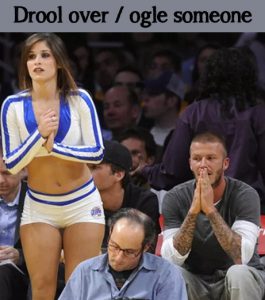
to drool over sb: to look or stare at someone with obvious desire.
To ogle sb.: To look or stare at someone in a way that shows you’re sexually interested in that person.
The guy is ogling the woman's bottom.
to give sb. a hickey:to leave a dark-coloured skin mark on the body, usually the neck, after having sucked for a long time.
to have good game: (also got game) To have a good technique and way of seducing and chatting up girls.
to have chemistry with sb: To have very good energy. You vibe with them either personally or sexually. (Also, to have a spark)
to make advances/passes at sb: (also to advance on someone) To say or do things that will get you closer to kissing or sleeping with someone (usually a man to a woman.)
to make eyes at sb/Give sb. the eye: To stare at someone because you like him or her. (similar to "to drool over sb.")
to play hard to get: If a girl plays hard to get, they resist getting seduced easily to make the man more interested.Pull moves on: Similar to make advances on someone. If you pull moves on a girl, you attempt to get further in the dating process by saying or doing the things that would seduce her.
to fondle sb: to caress lovingly and erotically.
to neck with somebody: to kiss and engage in erotic foreplay with sb.
Also : to pet/ petting/ heavy petting Slang
A creep (or creeper): A guy who likes a girl and tries way too hard to catch the girl’s attention, making the girl feel uncomfortable and totally uninterested in him.
Nouns:
A friend with benefit: A guy or girl who you’re not dating, but with whom you have a sexual relationship.
A jailbait: An extremely sexy-looking girl that you can’t legally have sex with because she’s younger than 18 (the legal age one can be in a relationship with someone over 18). If you do have sex with a jailbait girl, you might end up in jail. Just like the term suggests, she is a bait (object or piece of food used to attract prey) to jail.
A player: A man who is skilled in seduction, and sleeps with many women (sleeps around), especially through manipulation.
A wingman: A guy’s friend who helps him find sexual partners, and who would sacrifice himself by accepting to be with an unattractive girl so that his friend can seduce her more attractive friend. A woman’s wingman is another woman that helps her avoid men who are looking for sex.
A grenade man: A guy who accepts to be with the less attractive girl of a group so that their friends can be with the unattractive girl’s friends.
A womanizer: A guy who manipulates women to have sex with him. As opposed to a ‘player’, womanizer is a negative term.
Idioms:
First, second, third base: In the process in which you’re dating someone, first base stands for kissing. Second base is heavy touching above the waist. Third base is touching below the waist or oral sex.
Hit a home-run: Finally, a home-run is sex.
Hold your horses: This expression can be used in many different contexts, but if you’re hitting on a girl, she might tell you to hold your horses, which means to take your time or not go so fast. This might happen in a early-stage relationship when one of the two people involved is going too fast.
Out of one’s league: We say a girl is out of your league when you think she’s too beautiful to possibly want to date you.
Take one for the team: To sacrifice oneself for the general good of the team. In the context of a group of guys looking for girls to have sex with, the guy who takes the less attractive girl can be said to be taking one for the team.
One night stand: To have sex with someone with no intention of talk to that person again.
Single and ready to mingle: This is what people might say when they’re single. ‘To mingle’ means ‘to socialize’ and when someone says this, he or she implies that he’s interested in getting to know people.
Catcall: (also sometimes referred to as wolf whistle) The whistle men make when they see a sexy-looking girl on the street.
Deal-breaker: Something that causes you to not want to continue dating someone. You might like a person, but a deal-breaker is something that you can’t accept in them, and therefore you decide to stop seeing them. For example, for many people it is a deal-breaker when they find out that the person smokes.
Flirtatious remark: A playful and sometimes innocent thing you say to a person you’re attracted to.
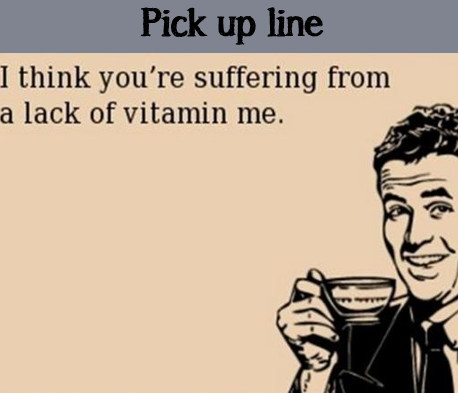
Pick up line: A line guys say to show they’re sexually or romantically interested in a girl.
Pushy: A guy is pushy when he’s too insistent about being with a girl, and doesn’t know how to take his time.
Sexting:Derivative from texting. Sexting is sending nude pictures or having a sexual conversation with someone via messages on the phone.
Sex and Kissing Vocabulary ! | British idioms, English expressions and slang
Top 10 I Love You Scenes In Movies
British romance
"Love Actually" - To me you are perfect
"Love Actually": Jamie & Aurelia, SWEET SCENE:
Colin Firth & Lucia Moniz
"Love Actually": Jamie and Aurelia
"Love Actually": Prime Minister Meets Natalie
"Love Actually": Prime Minister's Speech
Queen - "Love of My Life" (Live at Wembley -1986)
Best romantic song ever!!!
Think Before You Post
Think Before You Post / Sex Texting Sexting PSA Video