Showing posts with label Writing. Show all posts

Tuesday, 9 June 2020

Essay writing (Part 1)

Resultado de imagen para Writing essays
CPE ESSAY (Paper 2, Part 1)


WRITING STEPS:
1. Identify and underline the key points in both input texts. Make sure to include that when you write your essay.
2. Summarise the key points in your own words.
3. Use an academic writing style (formal or neutral register), a wide range of vocabulary with precision and varied grammatical structures (include inversion of order and impersonal constructions now and then). Show all that you know!
4. You must organise your ideas well, using an introduction, paragraphing and appropriate linking devices.
5. You need to draw conclusions based on the information given throughout the whole of your answer and give your opinion by signaling it clearly and explicitly.


Oraganisation and useful language:

*Introduction:
The overarching/ overall/common/general theme of both texts is...
The texts under analysis present complementary/ contrasting views on the issue of...
Both authors agree on the fact/notion that....
....although they probe into/ analyse it from slightly different points view/ angles/ standpoints and provide/offer different/diverse examples to illustrate their points/ideas.
While one author argues that...., the other seems to favour the idea that....
One author states that .... whereas the other one argues that...
On the one hand, the author of the first text/the former claims that..., while on the other hand, the author of the second text/the latter expresses that...
While the first text adopts a more abstract/ theoretical// viewpoint/ standpoint on the subject, discussing different approaches/ alternatives/ problems/ drawbacks/aspects concerning ....the second text appears to be more practical/descriptive/detached/liberal in its approach.
The first considers the fact that…/ adopts a more… viewpoint on... the second text focuses mainly on... rendering a rather... exposition of the subject matter.

*Body of the essay:

First paragraph: Summarize in your own words the key points of input text one. Give your opinion.
Second paragraph: Summarize in your own words the key points of input text two.Give your opinion.


*Useful connectors for the body of your essay:

*Adding ideas:
In the first place / Secondly/ Moreover/Furthermore/ What is more/In addition/ Additionally/ On top of that/ Yet another point worth noting/mentioning.../ Another factor to consider/take into consideration/Lastly/Finally/ Last but not least...

*Contrasting views:
On the one hand / on the other hand/ However, /Nevertheless,/Still,/Yet, ...
*Justifying
One reason why...
There are many advantages to…
It cannot be denied that...
Another positive/negative aspect// advantage/disadvantage/drawback of …is....
*Giving your opinion on the writers’ views:
In my opinion,/ To my mind,/ The way I see it,/ I am of the opinion that/ I believe/ I find...

*Conclusion: Restate your previous arguments, sum up and relate to a broader context.

All in all/ To sum up/ To conclude/ In conclusion.../All things considered/ Taking all of the above into account.../In view of the above, it can be concluded that.../As stated above, ....


Resultado de imagen para Writing essays


How is your paper graded?

CONTENT:
All the content has to be relevant to the task.The target reader has to be informed.
COMMUNICATIVE ACHIEVEMENT:
They writer has to evaluate the key point and express his or her own ideas clearly and in an easy-to-follow way. The register has to be formal or neutral all the way through the essay.
ORGANIZATION:
The ideas in the text have to be well organised to make it a coherent whole.The ideas need to be arranged in a logical sequence through the use of cohesive devices.
LANGUAGE: The writer has to use a wide range of sophisticated vocabulary and grammatical structures with accuracy and flexibility.


Monday, 6 April 2020

Article writing

Five Things You Need to Know about Writing Articles


In Cambridge Proficiency, you might be asked to write an article. But do you know what makes an article different from other types of writing?

Skriveskabeloner | Skabeloner på højt niveau | Tilmeld dig
1 The reader is identified
An article is like a direct conversation with the reader. The exam question might tell you who your readers are. For example, the students at a school, or the people living in a town or people who are interested in sports. Everything you write must speak to that reader and engage their interest right from the first sentence.

2 It has to get attention
If you're anywhere on the internet these days, you'll be bombarded with articles with headlines that pull the reader in. It's called "click baiting" and all the writer is trying to do is make you open the page to read their article.You need to think like a journalist when you're writing your article.
Look at the heading and the first line of this article. How did I get your attention?*

3 It has to be interesting
For an article to work, it has to be engaging enough to read all the way through. Remember how bored the examiner must be after reading fifty exam papers. Make it easier for them to get a good impression about your writing by entertaining them. Add humour, real life or made up examples, or make up quotes.

4 It has to be easy to read
Use subheadings to break up the text and make clear paragraphs. Write in a semi-informal, conversational style.  And make sure there is organisation to your ideas. The planning stage is vital for this.  Spend 5-10 minutes brainstorming ideas and choose the best three or four. Think what your subheadings might be and then write a short introduction that lets the reader know what to expect.
Keep in mind that you want the reader to keep reading, so don't tell them exactly what they will read. This is not an essay! In an essay you usually restate the question, explain how you will answer it and maybe say why it's important. In an article, that will kill the reader's interest.


5 Write a good ending
In an essay you sum up the points that have gone before and draw a conclusion from that. But in an article, it's better to give the reader something to think about, perhaps by asking them another question or giving them a call to action. Often, the best endings link back to the starting point in some way.
Here are two endings I could use for this article:

  • Look at your internet browsing history from the last day. Which articles got your attention? Can you see how they did it?
  • So, now you know how to write an article, why don't you write one giving advice on something you know about?
Common mistakes students make in articles
  • The language is too formal and more suited to essays. Avoid words like: to sum up, some people say, nevertheless, on one hand etc.
  • They don't use quotes or examples
  • They either use not enough, or too many, questions. The questions, called rhetorical questions because they don't require an answer, shouldn't be more than one per paragraph. Good examples are:
    • Have you ever ……..?
    • What do you think about ……..?
    • Are you one of those people who thinks that ……?
    • What would life be like if ……?
    • Will the future bring us ….. ?
* A title which makes the subject immediately clear. For some reason, people like reading lists! And a direct, rhetorical question in the first paragraph to make readers want to find out the answer.


Tuesday, 17 March 2020

Paper 2: Writing


Writing Paper

Number of compositions: .....
Overall duration of the paper: ........
Part One is a/n ........
Part 2 is a choice among ..... options
You receive a band score from .... to .....
Part 1 is between ....... and ...... words long
In Part 1 you are asked to  ...... and evaluate .... texts
Part 2 is between ..... and ........ words long
Choices in Part2 can be report, ................... , letter or ......................

Why can you lose marks in the Writing Paper?
1. ..........................................
2. ..........................................
3. ..........................................
4. ..........................................

What are the six words or pairs of words you should not use in your writing? For each word or pair of words mentioned, provide some of the alternatives mentioned by the speaker:
1.
2
3.
4.
5.
6.

Tuesday, 10 March 2020

Diagnostic period: Vocabulary & Writing

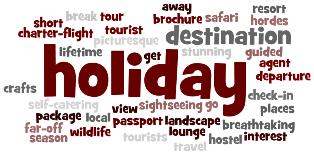
IELTS Holiday vocabulary

You probably know the meaning of individual words like ‘flight’, ‘tour’ and ‘view’. However, the key to showcasing your advanced English is to show you are able to use these individual words in combination with other words to form set phrases and expressions. Much of the work we'll do at C2 level will have to do with learning these fixed combinations, called "collocations", and expressions, called "idioms".


Take a familiar topic, such as, holidays, for example. If you are asked to speak or write about holidays, you first need to think of specific advanced vocabulary you can use to do so. Think of the kind of holidays you like. See what this C2 level student came up with in answer to the question: 

What kind of holiday do you like?

"I try to avoid tourist traps … I like to get away from it all and prefer going somewhere off the beaten track … last year I had the holiday of a lifetime … a two week wildlife safari in Kenya.

*In this answer, how many collocations and idioms can you identify?


*What about the answer to the following question?
What do you like to do when you’re on holiday?
 "I enjoy visiting the local places of interest … I like to go sightseeing and always sign up for guided tours as it’s a chance to be shown around and take photographs … one of my hobbies."


*And the one below?
 Do you have many tourists in your country?
"Yes … we have a lot of holiday resorts along the coast that are popular with tourists … most people come on package holidays and stay in one of the many hotels and self-catering apartments."


Practice Task:

*Describe a beautiful place you once visited. You should say:
  • when you went to this place
  • where it was
  • who you went with
Say why you liked it so much trying to use some advanced vocabulary in your answers, as in the example below:
"I'm not at all fond of long package holidays or guided tours, so a few years ago I decided to go on a long weekend to the Lake District in the UK in order to get away from it all and have a short break … it’s a very popular holiday destination in the north of England, not a far-off place in the middle of nowhere … I went on my own and had a wonderful time … I stayed in a youth hostel and met some really nice people … but the most memorable thing about the holiday were the breathtaking views … and lovely picturesque villages … it can get very busy with hordes of tourists so I decided to go out of season in the autumn  … the weather was fantastic and the shops were full of local crafts … a really great holiday … it’s certainly not the kind of short break for someone looking for a busy nightlife but if you want to relax in the middle of stunning landscape I would certainly recommend a holiday to the Lake District."

Definitions

  • all-in package/package holiday: a holiday where you purchase the travel and accommodation together
  • breathtaking view: an extremely beautiful view
  • far-off destination: somewhere a long way away
  • to get away from it all: to take a holiday to escape a busy or stressful lifestyle
  • guided tour: an organised group shown around a place of interest by an expert
  • holiday destination: where you go for a holiday
  • holiday of a lifetime: a special holiday that you are unlikely to repeat
  • hordes of tourists: crowds of tourists
  • local crafts: objects produced locally
  • long weekend: an extended weekend holiday including Friday or Monday
  • out of season: outside of the main holiday period
  • the middle of nowhere: far away from any towns and cities and where few people live
  • picturesque village: very pretty village
  • places of interest: sites of interest to tourists
  • wildlife safari: a holiday, often in Africa, to observe wild animals
  • short break: a short holiday
  • to go sightseeing:  to look around the tourist sites
  • stunning landscape: extremely beautiful countryside
  • travel agent: a shop that specialises in booking holidays
  • tourist trap: somewhere where too many tourists go
  • youth hostel: a cheap form of accommodation
Writing task: Write an email to an English-speaking friend you made on your last holiday telling him/her about your travelling experience, your life now,the first classes of your senior year and your plans and expectations for this year.

Tuesday, 15 October 2019

Proposal vs Report

Imagen relacionada

WHAT EXACTLY IS A PROPOSAL? 

Proposals are an option for CAE, though not for CPE. A proposal starts by describing the situation in a business, school, club, or other organisation you might be part of. For example, you might have to talk about the computer room in your college or the state of the canteen in your office. Sounds like a report, doesn't it? Well so far it's pretty similar.
The difference between a report and a proposal is that in the latter we have to give recommendations on improving the situation.
You have to persuade whoever is reading the proposal to make the changes you deem best.

So:
  • *describe a situation
  • *say how you think it could be better
  • *try to convince someone you are right

WHO'S GOING TO READ IT?

As you'd expect, sometimes the proposals in CAE are set in the business world, and sometimes in the academic world. In these cases you'll be writing in quite a formal style. Another common scenario is that you're in a club and want to propose some changes - if you're writing to the other members of the club you can be a bit less formal but you should still be polite.

ARE THERE ANY SPECIAL RULES?

You should use headings, and have an intro and conclusion. You CAN use bullet points, but it is always a sign of good style to write in full sentences. It's a writing test, not a content test. Bullet points can help people scan for content and ideas fast and efficiently, but they are often used by writers who are too lazy/scared to write complete sentences. Use them with care!
Oh, and it's not a letter, so don't start with 'Dear Sir or Madam.'


Sample Proposal:

CAE Task:

There are plans to demolish an old and unused building in the town where you are a student. You feel that the building should be saved. You decide to write a proposal for the town council explaining why you think the building should be preserved, suggesting what could be done to modernise it and saying how the building could benefit the local people.
Write your proposal.

Proposal to Repurpose Ducie Central

In this proposal I aim to persuade the Council that Ducie Central is a landmark building, that its demolition is not in the public interest, and that the building could still have a bright future.

WHY DUCIE CENTRAL SHOULD BE PRESERVED

Ducie Central was the first adult education centre in the city, and it stood as a point of pride for hundreds of years before falling into neglect. Even today in its shabby, vandalised state, it is warmly regarded - many older people took classes there, and even some teenagers can remember the annual fun fair that was held on the grounds.
But the building is more than memories - it's a place where education used to happen, and where it can happen again.

HOW IT CAN BE MODERNISED

Ducie is old and would cost a fortune to heat. There is no doubt it would be expensive to insulate, install triple-glazed windows, and set up solar panels on the roofs. However, local architects and the Engineering College are willing to work on my proposed redevelopment for free.
I recommend that one section be converted into office space - that would help offset the cost of the project.

REDEVELOPMENT WOULD BENEFIT EVERYONE

It is not hard to see who would benefit from demolition - property developers who would buy the land cheaply and throw up some copy/paste housing. Modernising the building and re-opening the college would benefit not only the people who would study there but also the whole community. It would be a focal point and we could hold the fun fair like in the past.

CONCLUSION

I believe that modernising the building is the best choice and strongly urge you to consider it.
(284 words)

Friday, 6 September 2019

Useful links for online practice for both CAE and CPE

Practice makes perfect | LearnEnglish Teens - British Council

*CPE Official  site:

*Online Practice for all Papers:

Practice CPE Tests: Flo-Joe: Online Practice Tests to take with answer key online

http://www.flo-joe.co.uk/cpe/students/tests/index.htm

Flo-Joe CPE web pageWith tips and resources such as word banks and a forum
http://www.flo-joe.co.uk/cpe/students/index.htm

More practice tests to do online

Exam EnglishOnline Practice Tests to take with answer key online
http://www.examenglish.com/cpe/index.php

Esl LoungeOnline Practice Tests to take with answer key online

English Revealed: Online Practice Tests to take with answer key online

*Reading Papers Practice:
Oxford House

Tuesday, 3 September 2019

Focus on Writing, Part 1

  Resultado de imagen para Proficiency Exceptional ability


  When writing (and listening and speaking) at Proficiency level, you are expected to give proof, i.e.evidence, of an exceptional level of English.


In Part 1 of the CPE writing exam,you are required to write a formal essay which summarises and evaluates two other texts.

Let's revise the steps you should follow:


Step 1 – Text analysis

Read both texts and decide if they are complementary or contrasting.

Underline the two key content points in each text.

Step 2 – Paraphrasing and summarising
Brainstorm different ways to paraphrase and summarise the key points.
What impressive structures can you use? Connectors, inversions, passives, collocations, expressions are expected at CPE level.

Step 3 – Evaluate and react
Decide which points you agree and disagree with.
Brainstorm your own thoughts (and experiences) on the subject.

You are required to summarise in your own words and using a formal register and style, evaluate and react :


Introduction: Main topic dealt with in both texts to summarise

Summary of 2 main views in text 1 through paraphrase (exemplification is not required)

Your own opinion on the summarised views in text 1 (Evaluation)

Summary of 2 main views in text 2 through paraphrase (exemplification is not required)

Your own opinion on the summarised views in text 2

Conclusion: your final and overall reaction to all the ideas presented in your essay.


The Assessment Scales state that in order to get full marks in Language you need to show "precision, sophistication & style": "Any inaccuracies occur only as slips".


Writing Mock # 4: Common Errors


Resultado de imagen para appearances are deceptive

*Think of possible and effective paraphrases for the following words:

1. happy:
2. happiness:
3. clothes:
4. national occasions:
5. feel intimidated:
6. lawyers, doctors and the like:
7. feeling of distance:
8. dress style:
9. formal clothes:
10. feel vulnerable:


*Spot and correct the error in the following sentences from some of your own writing. Then consider what band of the Language criterion from the Assessment Scales each sentence reflects.


1. I do not believe this, in spite the hypothesis presented has been scientifically proved.

2. Some outfits need to be appropriate for the occasion.

3. As it is true that uniforms makes us feel that we are in good hands, the ambiguity projected by the clothes use by some professionals may put us off.

4. This has both it's pros and cons. On one hand, using a uniform distinguishes workers from the others so it may be reassuring.

5. Clothes that are used for differents ocassions in working environments are able to convey a sense of competence.